
Most people who work in offices have sat through a meeting and thought, somewhere around the twentieth minute, that the whole thing could have been an email. The joke is so familiar that it has become a kind of shorthand for wasted time. Yet the same people often defend their own meetings fiercely, because they know that some conversations really do need everyone in a room.
Both instincts are right. The trouble is that we rarely stop to sort one kind of meeting from the other. This piece is an attempt to do that sorting properly: to explain which meetings are worth keeping, which ones should become documents, and how to write a document that people will actually read.
Decisions and updates are different jobs
The most useful single question you can ask about any meeting is this: will something be decided here that could not be decided without it? If the answer is yes, it is probably a real meeting. If the answer is no, it is probably an update wearing a meeting’s clothes.
An update is information moving in one direction. A project lead tells the team what happened last week. A manager passes on news from the leadership team. Someone presents figures that everyone could read for themselves. The audience listens, perhaps asks a clarifying question, and leaves knowing more than they did.
A decision is different. It involves people who hold different information or different views working their way to a choice. They need to hear each other’s reasoning, test it, disagree and change their minds. That back-and-forth is slow and messy in writing, and a good conversation can often settle in twenty minutes what a long email thread fails to settle in a week.
Ruth, a product manager at a small software company, started labelling every recurring meeting in her calendar with a D or a U. “About two-thirds of them were U,” she said. “And the ones marked D often spent most of their time on updates before getting to the decision in the last five minutes.”
The mixed meeting
That last point matters. Many meetings are a mixture: forty minutes of updates followed by a rushed decision at the end, when people are tired and the next meeting is looming. These are often the worst of both worlds. The updates would be quicker to read, and the decision deserves more than the scraps of the hour.
The fix is to split them. Send the updates in writing beforehand, and use the meeting only for the part that needs discussion. A sixty-minute weekly meeting can often shrink to twenty minutes this way, and the decisions get the full attention of the room.
The meetings worth keeping
None of this is an argument against meetings in general. Some kinds of gathering are hard to replace, and teams that try to replace them usually notice what they have lost within a few months.
Decisions with real disagreement. When people see a problem differently, talking it through is usually faster and kinder than trading long messages.
Difficult news. Redundancies, reorganisations and failed projects should be explained by a person, with room for questions. A document alone feels cold, and rumours fill the gap.
Early-stage thinking. When an idea is still vague, a conversation lets people build on each other’s half-formed thoughts in a way that writing rarely does.
One-to-ones. Regular conversations between a manager and each member of their team are where problems surface early and where trust gets built.
Getting to know each other. New teams, new colleagues and teams that rarely meet in person need some time together that has no agenda beyond that.
The last category is easy to dismiss as a luxury, but it is often what makes the rest of the work run smoothly. People who know each other a little are quicker to ask for help, slower to take offence at a blunt message and more willing to disagree openly. A team that cuts every social meeting in the name of efficiency may find its written communication becoming more guarded and more tiring.

How to write an update people will read
Turning meetings into documents only works if people read the documents. Many written updates fail because they are long, vague or written for the author rather than the reader. A few habits make a large difference.
Lead with what the reader needs
Put the most important information first. If something is blocked, if a date has moved or if you need someone to do something, say so in the opening lines. A reader who stops after two sentences should still know the thing that matters most.
Journalists call this the inverted pyramid: the key facts at the top, supporting detail below, background at the bottom. It works because readers skim, and they skim from the top.
Use a fixed shape
Regular updates are easier to write and read when they follow the same structure each time. A simple format that many teams use has four parts: what was done, what is planned next, what is blocked, and anything others need to know. Readers learn where to look, and writers do not have to decide how to organise their thoughts every week.
Keep it short and specific
Short updates are more likely to be read. “Design work on the checkout page is going well” tells the reader very little. “The checkout designs are finished and with the developers; we expect to test them on the 14th” tells them what happened and what comes next. Specific dates, names and numbers are what make an update useful.
Lewis, who runs a small team at a charity, keeps a rule for himself: if an update is longer than he would want to read on his phone while waiting for a bus, it is too long. He moves the extra detail into a linked document for anyone who wants it.
Ask for replies
A meeting has a built-in moment for questions. A document needs one added deliberately. End your update by naming the people whose input you need and by when. “Sam, can you confirm the budget by Thursday?” gets a reply far more reliably than a general invitation to comment.
Write first, then meet
For the meetings that are worth keeping, writing still helps. One of the most effective habits a team can adopt is to write a short document before any decision meeting, setting out the question, the options and the author’s recommendation. Everyone reads it before the meeting, or in the first few minutes of it, and the conversation starts from shared ground.
This approach has several benefits. The person proposing an idea has to think it through clearly enough to write it down, which often exposes gaps in their own reasoning. Quieter colleagues, who may struggle to get a word in during a lively discussion, have time to form their views. And the meeting itself tends to be shorter, because nobody spends the first twenty minutes explaining the background.
A meeting where everyone has read the same page is a conversation. A meeting where nobody has is a lecture with interruptions.
The document does not need to be long. A single page is usually enough: what are we deciding, why does it matter, what are the options, what do I recommend and why. Some teams add a section for open questions, which gives readers a place to raise doubts before the meeting starts.
After the meeting, the same document becomes the record. Add a line at the top stating what was decided, who will do what and by when. Months later, when someone asks why a choice was made, the answer is in one place, with the reasoning attached.
A monthly calendar review
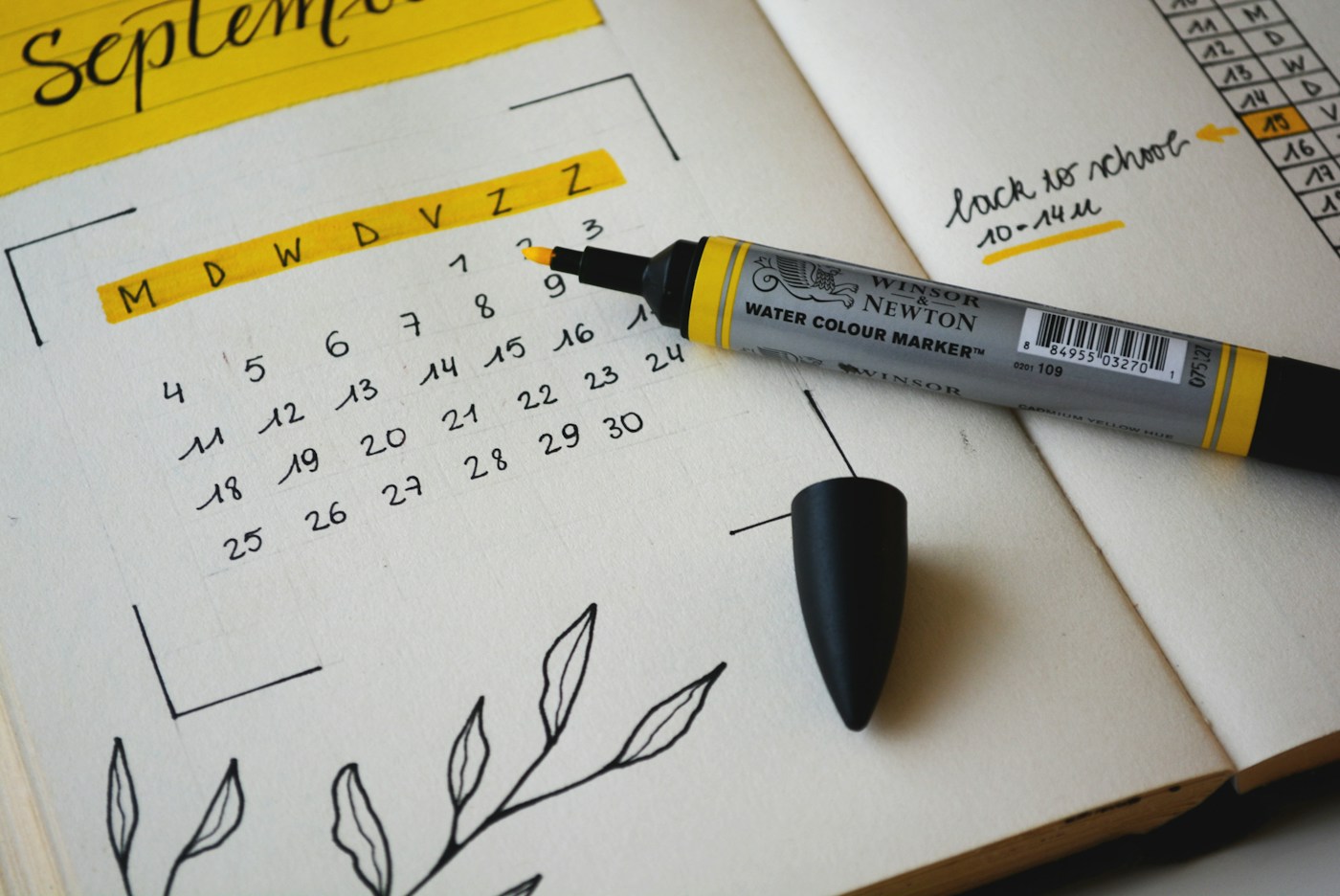
Meetings have a way of multiplying. A project starts, a weekly check-in is created, and the project ends but the check-in continues for another year because nobody thought to cancel it. The only reliable defence is to look at your calendar regularly and ask hard questions about what is in it.
Once a month, set aside half an hour to go through every recurring meeting you attend or organise. For each one, work through a short set of questions.
Is this meeting mainly for decisions or mainly for updates?
If it is for updates, could they be written and read instead?
Do I need to be here, or could I read the notes afterwards?
Is it still the right length and frequency? Could a weekly meeting be fortnightly, or an hour be thirty minutes?
Does it still have a clear purpose, or has that purpose ended?
If you organise a meeting, you have the power to shorten, reshape or cancel it. If you only attend, you can still ask the organiser whether it is still needed, or politely decline and ask for the notes. Many people are surprised by how often the organiser is relieved to be asked.
Ruth, the product manager, does her review on the first Monday of each month. In her first review she cancelled three recurring meetings outright, moved two to a written format and cut the length of another two. “Nobody complained,” she said. “One person thanked me. I think everyone had been waiting for someone else to go first.”
Making the change stick
Individual habits help, but meeting culture is usually set by teams and by managers. If you lead a team, the most powerful thing you can do is model the behaviour you want. Send your own updates in writing. Write a short page before calling a decision meeting. Cancel meetings that have outlived their purpose, and say publicly that you did.
It also helps to agree a few shared rules. Some teams require every meeting invitation to include a one-line purpose and a note of whether a decision is expected. Others protect certain hours from meetings entirely, so people have long stretches of uninterrupted time for focused work. The specific rules matter less than the habit of treating meeting time as something that costs everyone in the room.
That cost is easy to underestimate. A one-hour meeting with eight people uses eight hours of working time, which is a full working day for one person. Framed that way, the question to ask of any meeting is whether it is worth a day of someone’s work. Many are. Plenty are not, and those are the ones that could have been a document all along.

Written by
Maya Okafor
Maya edits the Work desk. Before The Kestle she spent eight years reporting on labour and small business for regional newspapers.

