
Ask people where they were when they heard about a major shock, a national tragedy or a death in the family, and many will answer instantly. They can tell you the room, the time of day, who told them, what they were holding. The memory feels sharp and fixed, like a photograph they can take out and look at whenever they like.
Psychologists have studied these memories for nearly fifty years, and the findings are unsettling. The vividness is real, and so is the confidence. The accuracy is much less reliable than it feels. This piece looks at what these memories are, what the research found and what it says about how memory works for everyone.
A name for the snapshot
In 1977 the psychologists Roger Brown and James Kulik published a paper in the journal Cognition titled “Flashbulb memories”. They had asked people about how they learned of shocking public events, most famously the assassination of President John F. Kennedy in 1963.
Their participants reported strikingly detailed memories of the moment they heard the news. They recalled where they were, what they were doing, who told them, how they felt and what happened immediately afterwards. Brown and Kulik gave these memories the name that stuck, comparing them to a photograph taken with a camera flash that captures everything in the scene, including trivial details.
Brown and Kulik suggested that events which are surprising and personally significant might trigger a special memory mechanism, a kind of “print now” command that records the whole scene. It was an appealing idea because it matched how these memories feel from the inside. What the study could not do was check whether the memories were true, because nobody had written down the original details at the time.
The psychologist who remembered wrongly
One of the most influential challenges to the idea came from a personal anecdote. Ulric Neisser, often described as a founder of cognitive psychology, wrote about his own flashbulb memory of hearing about the attack on Pearl Harbor in December 1941.
For years he remembered that he had been listening to a baseball game on the radio when the broadcast was interrupted with the news. The memory felt clear and certain. Only much later did he realise it could not be right as he remembered it: there are no baseball games in December.
Neisser did not conclude that the event never happened or that his memory was worthless. His point was subtler. The memory had been assembled from real ingredients, but they had been combined in a way that did not match what actually happened. And he had never noticed, because the memory felt like a direct recording.
A memory can be vivid, detailed and held with total certainty, and still describe a morning that never quite happened.
Testing memory against the record
An anecdote proves little on its own. What researchers needed was a way to capture people’s memories immediately after a shocking event and then compare those accounts with what the same people said much later.
The Challenger study
The opportunity came on 28 January 1986, when the space shuttle Challenger broke apart shortly after launch. The next morning, Neisser and his colleague Nicole Harsch asked a group of university students to write down how they had heard the news: where they were, what they were doing, who told them and how they felt.
Roughly two and a half years later, the researchers tracked down many of the same students and asked them the same questions. They then compared the new accounts with the ones written the morning after the disaster.
The differences were large. Many students’ later accounts differed substantially from their original ones, sometimes in almost every detail. A person who had first written that they heard the news in a class might later recall hearing it on television with friends. Relatively few gave later accounts that closely matched what they had written at the time.
The most striking finding concerned confidence. Many students were very sure of their later memories, even when those memories contradicted what they had written themselves. When shown their original accounts, some continued to trust their current memory over the written evidence in their own handwriting.
The 9/11 study
The Challenger study showed that flashbulb memories change. It did not show whether they change more or less than ordinary memories. That question was taken up by Jennifer Talarico and David Rubin, who began a study at Duke University on 12 September 2001, the day after the terrorist attacks in the United States.
They asked students to record two memories: how they had learned about the attacks, and an ordinary event from the days just before, such as a party or a sports practice. The students were then tested again at different intervals over the following months, and the researchers compared the consistency of each memory over time.
Their results, published in Psychological Science in 2003, were clear. The consistency of the 9/11 memories declined over time at a similar rate to the consistency of the everyday memories. In other words, the flashbulb memories were no more accurate than ordinary ones in the long run.
What did differ was how the memories felt. For the everyday memories, students’ ratings of vividness and their belief in the memory’s accuracy dropped over time, which is what you would expect as details fade. For the 9/11 memories, vividness and confidence stayed high. The students’ sense of remembering clearly held steady while the details themselves drifted.
How memory rebuilds the past
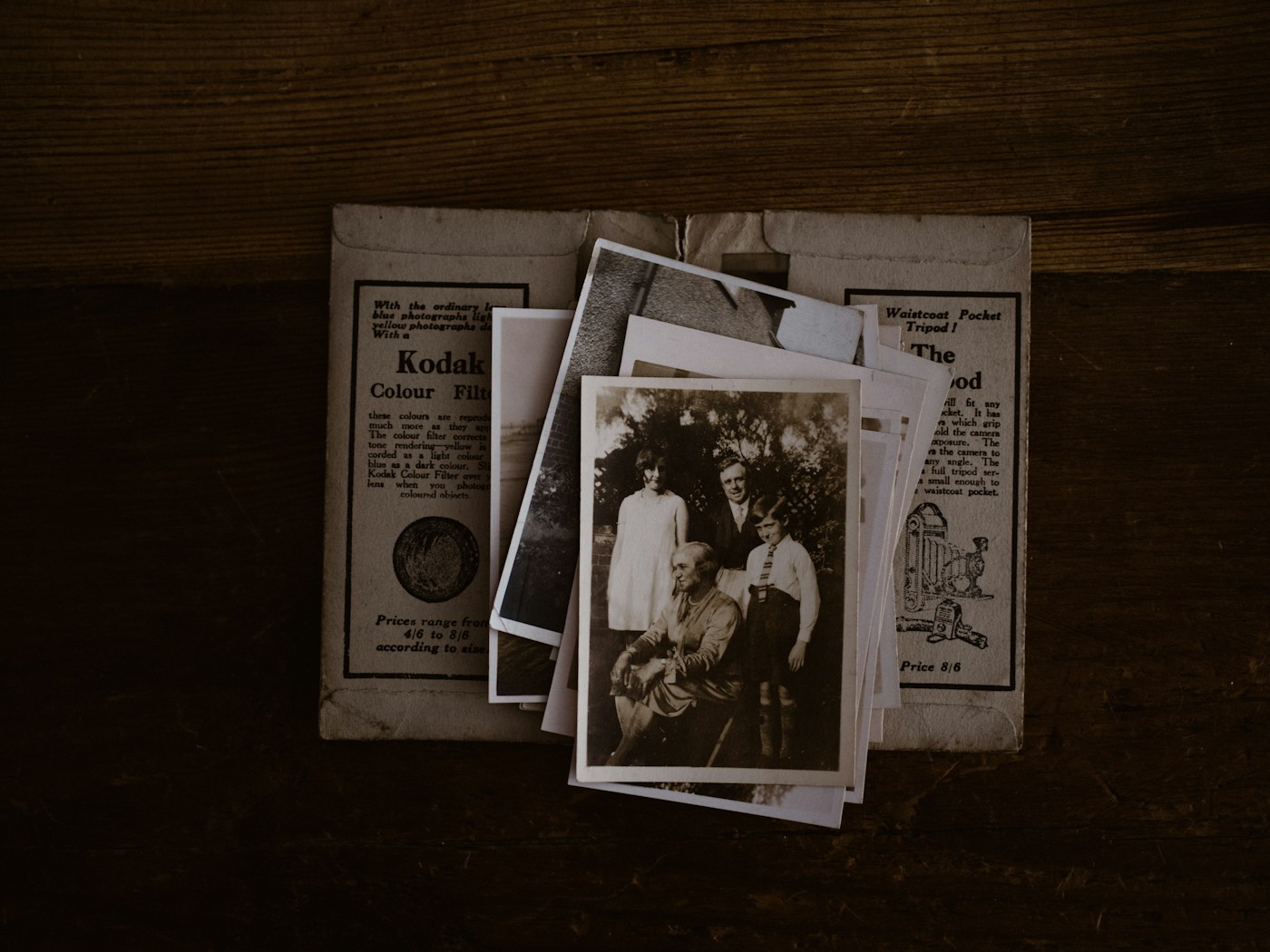
These findings make more sense once you drop the idea that memory works like a recording. Psychologists have long described remembering as reconstruction. When you recall an event, you do not play back a stored file. You rebuild the scene from fragments, general knowledge and expectations, and the result feels like a single, seamless memory.
This idea goes back at least to the British psychologist Frederic Bartlett, who in the 1930s asked people to read an unfamiliar folk tale and then retell it repeatedly over time. Their retellings became shorter, and unfamiliar details were gradually replaced by ones that fitted their own expectations. The story drifted a little further with each retelling.
Several everyday processes feed into this kind of drift:
Retelling. Each time you tell a story, you shape it for the listener. The version you tell becomes the version you remember.
Later information. News coverage, conversations and photographs you see afterwards can blend into your memory of the original moment, so you remember details you only learned later.
Borrowed scenes. Details from similar occasions, such as another time you watched the news with friends, can slip into the memory without any sense that they came from elsewhere.
Filling gaps. Where a detail is missing, the mind supplies a plausible one. It does not mark the gap as filled.
Major public events are especially exposed to these processes. They are discussed constantly, replayed in the media and marked by anniversaries. Every time, the memory is rebuilt again, and every rebuilding is a chance for it to change.
Why emotion raises confidence more than accuracy
Flashbulb memories are no more accurate than ordinary ones, yet they feel much stronger. Part of the explanation lies in how emotion affects memory.
Strong emotion does help us remember some things. People tend to remember the central fact of an emotional event very well. Nobody forgets that the event itself happened. Emotional arousal also seems to sharpen memory for the details at the centre of attention, sometimes at the expense of details at the edges.
The circumstances of hearing the news, which room you were in and who told you, are often exactly those edge details. They were not the focus at the time. The emotional charge of the event, however, lends the whole memory a feeling of importance and clarity. You know that this moment mattered, and that feeling extends to everything attached to it, including the parts that have quietly changed.
The role of rehearsal
Flashbulb memories are also rehearsed far more than ordinary ones. People talk about where they were for years afterwards. That repetition makes the story fluent and easy to recall, and ease of recall is one of the signals the mind uses to judge whether a memory is accurate. A story you have told many times feels true partly because it comes to mind so smoothly.
What this means for everyday life
None of this means memory is useless. Most of the time it serves us well, and the gist of important events, what happened and roughly when, is usually preserved. The problems lie in the specific details and in the confidence we attach to them.
That has practical consequences. In families, two siblings may remember the same childhood event very differently, each completely sure of their version. Neither is necessarily lying, and both may be partly wrong. Hannah, a teacher who compared notes with her brother about the day their grandfather died, discovered they placed themselves in different houses. “We both had a clear picture,” she says. “We just could not both be right.”
The same applies more seriously in legal settings, where the confidence of a witness can carry great weight. Research on memory has made courts and investigators more aware that a sincere, confident witness can still be mistaken, and that the way questions are asked can shape what people remember.
A few habits follow from what the research shows:
Treat vividness and confidence as feelings about a memory, not proof that it is correct.
When a detail matters, look for a record made at the time: a message, a diary entry, a photo with a date.
When someone remembers an event differently from you, assume honest reconstruction before assuming dishonesty.
If you want to remember something accurately, write it down soon afterwards, before the retelling begins.
Living with an imperfect record
The research on flashbulb memories does not say that people who remember where they were are wrong about everything. It says that the part which feels most like a photograph, the exact scene around the moment, is the part most likely to have been quietly edited over the years.
That can feel unsettling, but it is also a useful kind of humility. Memory seems suited to helping us make sense of the past and prepare for the future, and for that job, a flexible, reconstructed story works well. It was never built to be a perfect archive. Knowing that makes it easier to hold our most vivid memories a little more loosely, and to be generous when someone else’s version of the same day turns out to be different.

Written by
Nadia Ferreira
Nadia writes about the science of ordinary life, from weather forecasts to memory. She trained as a meteorologist and still checks the radar before she checks her messages.
